Showing posts with label energy. Show all posts

Monday, August 31, 2015

Unreliable Energy Focus: Europe's Natural Gas Dreams

Italian energy giant Eni announced today that it has discovered a supergiant gas field in the Mediterranean Sea off the coast of Egypt. The gas field may surpass the South Pars / North Dome field in the Persian Gulf, which is currently the largest in the world. The time it will take to develop the field will depend on the field's exact geology as well as the resources available. It will also depend on Egypt's near-term stability.

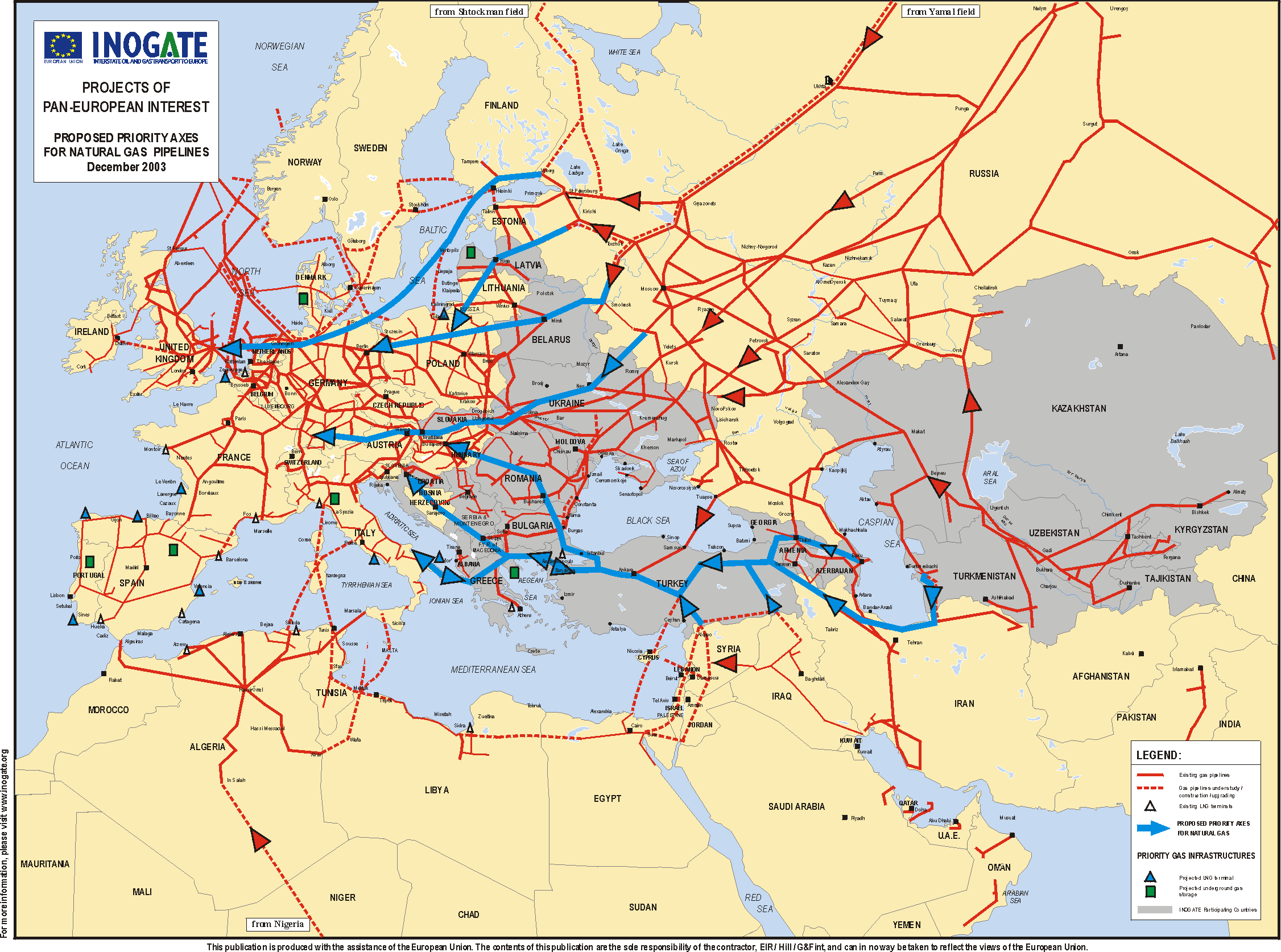
While natural gas near Egypt will greatly support the rising demand by Egypt's growing population, there is likely also another nearby customer interested in natural gas and willing to pay a premium for it - Europe. Apart from Norway, every other European nation is a net energy importer, and natural gas is a particular contributor to that dependency (though not as much as crude oil). European natural gas needs (and the price Europeans are willing to pay for it) would likely far outstrip those of Egypt, though the thought of exporting natural gas that may be needed domestically could prove unpalatable in Egypt's unstable environment.

(Source: Mappery)

For years, Europe has sought to move away from its extreme natural gas dependency on Russia. That dependence has complicated foreign policy, even as Russia's own dependence on its energy reserves for export has proven to be a potential weakness. The new field in the Mediterranean may present Europe with such an opportunity to diversify and divest without much impact to its own economies.

Wednesday, April 9, 2014

Unreliable Energy Focus: Libya's Energy

Libya hasn't exactly been a united country since the fall of Muammar Gaddafi in 2011. The elected government has failed to control the rebel-held eastern half of the country, but compromise may be the order of the day. The two sides reached an agreement to return four ports (two immediately) to government hands. The ports handed over, Hariga and Zueitina, are the smaller of the four. The larger two ports, Es Sider and Ras Lanuf, will likely take more time to hand over. The first two represented goodwill while the last two are the stakes. Rebel leaders continue to demand measures of autonomy, revenue sharing, and development in return for the final pieces of the agreement. With oil exports being the primary bargaining chip, it would be expected that any agreement becomes more complicated and lengthy than the text on any page.

Libya's eastern ports (Source: WorldBulletin)

So why is Libya even important in the energy marketplace? It has lots of it, particularly oil. While currently only producing about 150,000 barrels of oil per day (leaving the government near financial disaster, though this is denied by the government), Libya has produced upwards of 1.4 million barrels per day since the civil war and upwards of 1.8 million in the years preceding it. Overall, Libya has the ninth most oil reserves in the world, even while a significant portion of its land remains a hydrocarbon terra incognita. In addition, Libya has large natural gas reserves. The upside of Libya's energy sector remains inviting, given its size, small population, and proximity to Europe. That last benefit, a geographic one that cannot be easily overcome by competitors, is critical. Much of Libya's oil is exported to Europe and it has important natural gas pipelines connecting it to the European mainland via Italy. These energy connections may prove increasingly important as European tensions with Russia increase.

The agreement this week between the government and rebels - indicating a possible resumption of Libya's higher export levels - led to a fall in the market price of oil. However, with a ten-day window before oil flows from the ports and two to four weeks before the larger two ports may be handed over, there is little celebration elsewhere thus far; even optimists are cautious. Libya is an important cog in the international energy wheel, albeit a damaged one that has been turning for some time now. If Libya re-enters the energy scene at previous levels, it will make an impact and balance Europe's energy sources.

Sunday, March 16, 2014

A Divided Libya in the Backlog of International News

International events seem to be ablaze right now. Between the fear of Crimea seceding to the frantic search for Malaysia Airlines flight 370, there's just not much else that is getting more than a byline these days.

Libya seems to be one of those stories being pushed below the fold. There remains a lack of unity between the eastern and western sections of the country. The 2011 Libyan Civil War may have freed the country from Muammar Gaddafi's dictatorial chains, but they have not mended social, political, and economic divisions since. As with many resource-based economies, some of the most potent underlying resentment stems from regions where resources are found and extracted and the capital, where they are often spent. Eastern Libya has been, by many definitions, operating as an autonomous region of Libya for over a year now.

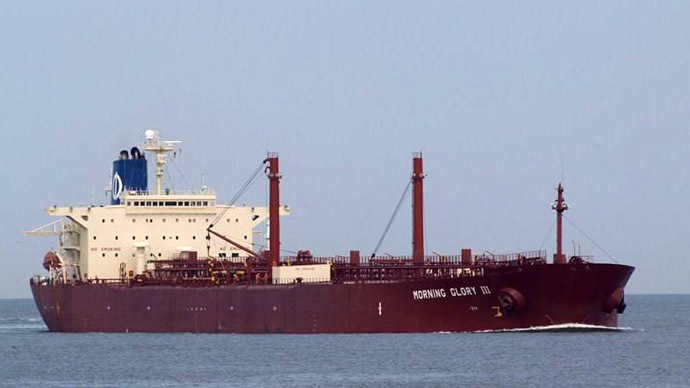
The rebel government recently tested its autonomy. Just over a week ago, an oil tanker - Morning Glory - docked in Sidra, breaking the blockade of eastern ports held by the rebel government. The rebel government quickly began to load the tanker with oil. Somewhat ironically, the tanker is flying the flag of North Korea. Initially, Libya threatened to bomb the tanker were it to load oil and attempt to leave, having previously fired warning shots at other tankers near ports. The tanker ended up loading 234,000 barrels of oil, evading the naval blockade after being fired on for two days, and is now in the Mediterranean Sea, though the rebels claim it has reached its final destination.

                                          (Morning Glory, from marinetraffic.com via RT.com)

For what it's worth, North Korea denied involvement and claimed to revoke the tanker's registration. It is unlikely that any countries within so few sailing days are willing to risk strained relations with Libya; it's last recorded position seems to be off the coast of India, but that was prior to reaching Libya. It also may have truly been under the Liberian flag.

Nonetheless, any evidence of associations between Libyan rebels and North Korea are bound to strain relations further. The weakness of Libya's government in stopping the tanker led to Prime Minister Ali Zeidan being voted out of office, which doesn't exactly help strengthen faith in government. Around the world, there exists a fear that oil will prove to be Libya's undoing and lead to a second and more violent iteration of the Civil War. It seems that, for the time being, Libya is stuck between the possibility of further war and the Iraq-Kurdistan model of resource-based autonomy, which has not fared so well either. It couldn't hurt to suggest that oil revenues be used wisely, with perhaps technical assistance and planning from some experienced Western powers. Libya's population of just over six million is not so far from Norway's five million, after all.

Monday, January 13, 2014

Libya's East Side Story

Flying under the radar in late 2013, leaders in the eastern half of Libya, which holds 60% of the nation's oil production, declared an autonomous government. Libya has the world's ninth largest oil reserves, and other energy resources aplenty. This declaration came about two years after Libya's Civil War ended, which also ended the 42-year reign of Muammar Gaddafi. Gaddafi's dictatorship largely held in check a nation that had a history of regional autonomy. The political subdivisions throughout Libya's history are Tripolitania, Cyernaica, and Fezzan, with most of the population residing in Tripoliatania and Cyernaica.

Libya's Subdivisions (Source: Fragile States Resource Center)

The recent announcement was certainly a blow to the centralized leadership in Tripoli, but reading the events carefully helps add details to the story. Proponents would like the return of the three-state Libya, last extant under King Irdis in 1951, and one that existed, at times, throughout Libya's history. Although this certainly could lead to a break-up of the country, leaders from the region did not explicitly declare independence, or even self-determination. Leaders seem to be seeking a status closer to the experience of the Kurdish region of Iraq following the Iraq War (though even that status is still debated).

Much like in Iraq, it may boil down to natural resources, regional access, and service delivery. The eastern shadow government is offering up oil to foreign buyers and is promising to open the region's energy resources under its own terms. The central government, meanwhile, has indicated that it will use force, if necessary, to prevent any circumvention of its authority. It has already fired toward a Maltese tanker in order to force it to deviate from an eastern port. Meanwhile, regional access and governmental service delivery are both hampered by protests and a burgeoning insurgency that has blocked off the region for months. These issues sound familiar and are a formula for bigger problems.

Infighting, and possibly even open warfare, will continue to be a risk unless the structure of Libya indicates more clearly how the central government will work with regional authorities. While levels of autonomy are integral to regional function in a territory as large as Libya, it is important that those levels are determined wisely and with both sides in agreement. Nonetheless, all sides must recognize that central governance, to some extent, is necessary. 

Tuesday, September 3, 2013

Unreliable Energy Focus: Liquefied Natural Gas & International Gas Markets

The first energy shock of the 21st century has most certainly been the Phoenix-like revitalization of United States energy production. An expected decline has morphed into an increase in production, turning the energy world on its heels. Previously, it was expected that the United States would not only continue to be dependent on foreign energy imports, but that those imports would increasingly dominate the economy and, to an extent, foreign policy. In fact, the turnaround has shown the United States is moving toward energy independence. Energy independence would allow one of the world's most powerful nations to operate with limited influence on foreign policy from countries who have hitherto sold it its energy.

More so, it may even allow it to undermine the resource-based economies of those nations. An aftershock is most certainly coming: liquefied natural gas (LNG). Unlike oil, which can be stored in barrels, put on vessels, and transported around the world easily, natural gas is not so portable. Natural gas pipelines are costly to maintain and can only traverse the land so far. Once the land ends, pipelines become even more difficult to develop and maintain. These limits to natural gas portability lead to closed markets and differences in gas prices around the world.

So far, most cost-effective method of transporting natural gas involves transforming it into a liquid, transporting it, and then regasifying it. In a nutshell, this is the LNG process. There are a limited number of LNG liquefaction and gasification plants in the world right now. However, an increasing number are being planned and built. In a sense, the glut in the market that is in the United States right now, has the very potential to undermine prices and energy market structures around the world. With a freer market, resource-intensive economies reliant on high-priced earth-based exports will have their influence on the foreign policy of other nations severely diminished.

Tuesday, June 11, 2013

Unreliable Energy Focus: Subsea Operations & the Dream of Flatness

This article is the first (of hopefully many) that will focus on the international energy sector. Without a consistent publication schedule, they will be titled, for the time being "Unreliable Energy Focus."


                                          (source: Bloomberg Businessweek)

Floating oil platforms, subject to weather and waves, are expensive and soon could be a thing of the past, if the energy industry is taken for its word in a recent article in Bloomberg Businessweek. In fact, the industry wants to put nearly all the technology currently on the ocean's surface on the sea floor, sans humans. Subsea operations would be entirely mechanical and largely automated.

While the image above may look like fantasy, putting machinery down on the abyssal plain, able to withstand the extreme pressure and temperatures, is already happening, though not on the scale desired by the energy industry. The energy (largely oil, some gas) is currently pumped up, albeit inefficiently, often miles to the surface where it is processed.

There are, nonetheless, a number of technical and environmental factors to be considered that are being overlooked by the business case. To start, the abyssal plain is flat and largely featureless, but it is not "tabletop flat" and it is not entirely lifeless. To put it gently, humanity knows very little about the abyssal plain, and even less so about the natural processes that occur there. Putting major machinery there could disrupt fragile chains that we know nothing about (not that we haven't done that before).

Additionally, without humans, what is the plan for maintenance, repair, and damage control? It seems that the whole system would be built on sensors and robots that could fail and produce far-reaching issues. Deepwater Horizon happened not so long ago and the long-term effects of that spill are still unknown. In a sense, is the system setup to handle a black swan event?

It was in 1961 that the first pressure control valves were places on the seafloor by Royal Dutch Shell. Even though technology moves ever faster, putting everything on the seafloor and moving to entirely subsea operations so quickly is unlikely - it has been a long and gradual process since 1961. Moreover, an evaluation of the potential environmental impact needs to be conducted. The short-term benefits should not trump long-term concerns. After addressing these issues, it may be time to move forward, but it would be a failure if we kid ourselves about this being easy.
Friday, April 27, 2012

Don't cry for Argentina...

It seems that the Argentinian President Cristina Fernandez needs a summer crash course in history and economics, particularly as they relate to capital-intensive energy sectors. It is still to a large extent beyond me how Ms Fernandez was the deemed the most qualified individual in a country of approximately 40 million (at the time), but, then again, we haven't made the wisest decisions here at home either over the past decade or so. But enough of past history. The other week, Ms Fernandez decided that the best way to keep Argentina financially afloat would be to nationalize the 51% stake of Yacimientos Petrolíferos Fiscales (YPF), the country's largest energy company. YPF was formerly Argentina's national oil firm, having been privatized just in the past decade. It seems that popular support in the country's senate makes this move likely to actually occur. (EDIT: Approved by the senate!)

Many outside observers consider this an unwise decision, and rightly so. To start, the entire 51% share being nationalized is owned by Respol, a Spanish company (minority owners, largely Argentine, would be less affected). Spain is one of Argentina's largest trading partners, so that doesn't seem like a good way to spur economic development or any growth. Part of Ms Fernandez's claims include the lack of reinvestment by YPF/Respol. Problematically, nationalization scares away investment. This is particularly noticeable in the energy sector where significant amounts of capital are needed just to take chances of finding and producing energy at a profitable rate. Examples just over the past twelve or so years include Russia and Venezuela, while going further back one can look at Libya. All in all, a country such as Argentina needs the expertise, capital, and sheer willpower of large energy firms just to explore, take chances, and invest in developing new energy opportunities. Nationalization is not going to make the multinational companies who lead the international energy sector eager to invest; the risks of energy investment are high enough without the political risk of expropriation.

Respol is asking for upwards of $10 billion for its stake, a sizable chunk for a country that has repeatedly found creative ways to manage its economy over the past few years, including raiding central bank coffers and pension funds. Compounding this situation is that Argentina still has not fully agreed to pay out for its default a decade ago. Respol may not get any compensation (or may get it decades down the line). In turn, this will lead other industries, beyond energy, to toe carefully before entering Argentina. After all, who wants to risk developing products, markets, and infrastructure in a country that may take it all away without any real compensation?

The repercussions of this move, following a number of other, similarly concerning government decisions (noted briefly above), can have ramifications for Argentina's economy for years to come. Perhaps it is time to move beyond populism and revisit economics and history in Argentina, or is it too late? Regardless of the terminal station this road leads Argentina to, don't cry for Argentina; it chose the road itself.