Showing posts with label Europe. Show all posts

Monday, August 31, 2015

Unreliable Energy Focus: Europe's Natural Gas Dreams

Italian energy giant Eni announced today that it has discovered a supergiant gas field in the Mediterranean Sea off the coast of Egypt. The gas field may surpass the South Pars / North Dome field in the Persian Gulf, which is currently the largest in the world. The time it will take to develop the field will depend on the field's exact geology as well as the resources available. It will also depend on Egypt's near-term stability.

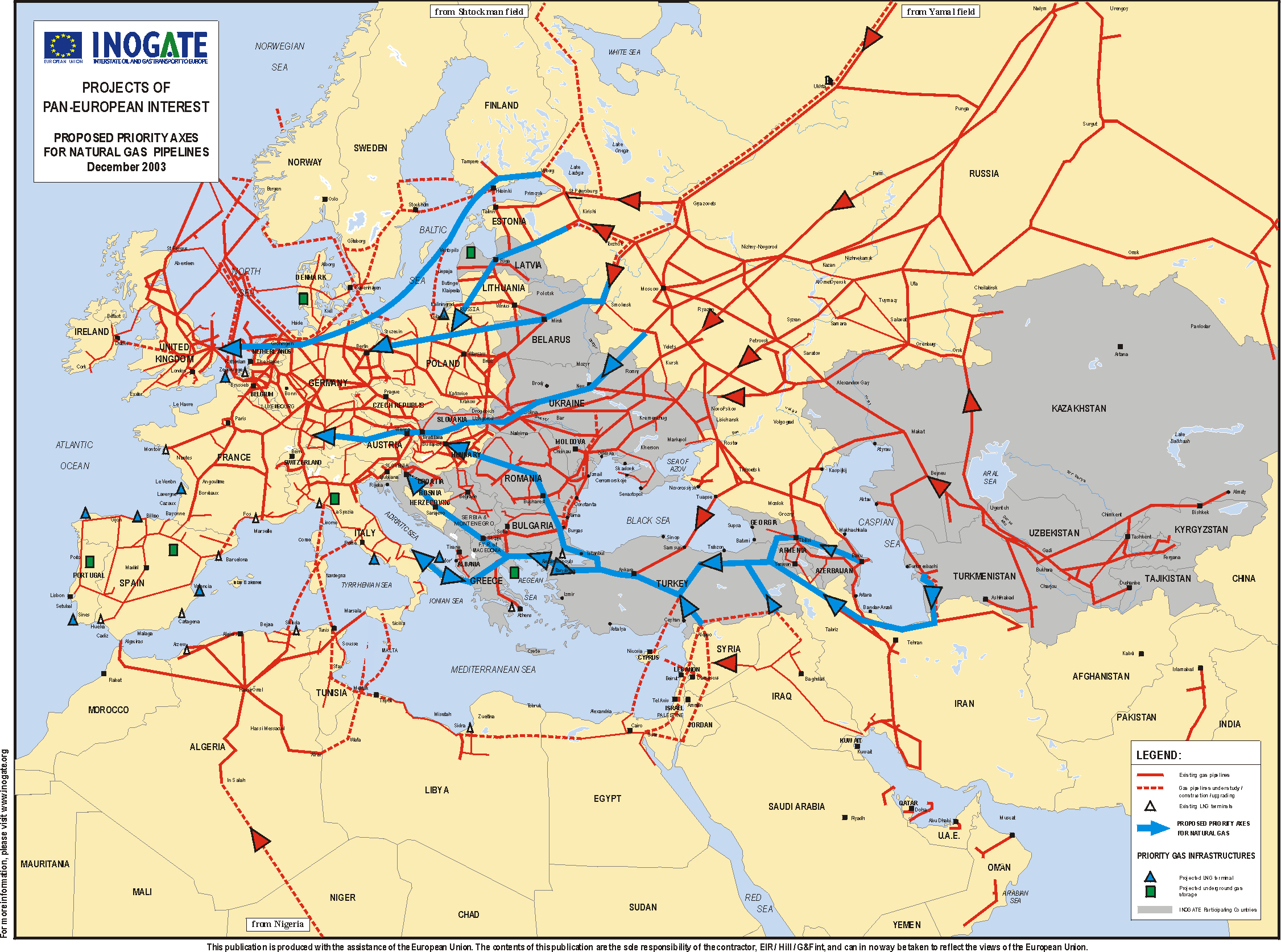
While natural gas near Egypt will greatly support the rising demand by Egypt's growing population, there is likely also another nearby customer interested in natural gas and willing to pay a premium for it - Europe. Apart from Norway, every other European nation is a net energy importer, and natural gas is a particular contributor to that dependency (though not as much as crude oil). European natural gas needs (and the price Europeans are willing to pay for it) would likely far outstrip those of Egypt, though the thought of exporting natural gas that may be needed domestically could prove unpalatable in Egypt's unstable environment.

(Source: Mappery)

For years, Europe has sought to move away from its extreme natural gas dependency on Russia. That dependence has complicated foreign policy, even as Russia's own dependence on its energy reserves for export has proven to be a potential weakness. The new field in the Mediterranean may present Europe with such an opportunity to diversify and divest without much impact to its own economies.

Wednesday, April 9, 2014

Unreliable Energy Focus: Libya's Energy

Libya hasn't exactly been a united country since the fall of Muammar Gaddafi in 2011. The elected government has failed to control the rebel-held eastern half of the country, but compromise may be the order of the day. The two sides reached an agreement to return four ports (two immediately) to government hands. The ports handed over, Hariga and Zueitina, are the smaller of the four. The larger two ports, Es Sider and Ras Lanuf, will likely take more time to hand over. The first two represented goodwill while the last two are the stakes. Rebel leaders continue to demand measures of autonomy, revenue sharing, and development in return for the final pieces of the agreement. With oil exports being the primary bargaining chip, it would be expected that any agreement becomes more complicated and lengthy than the text on any page.

Libya's eastern ports (Source: WorldBulletin)

So why is Libya even important in the energy marketplace? It has lots of it, particularly oil. While currently only producing about 150,000 barrels of oil per day (leaving the government near financial disaster, though this is denied by the government), Libya has produced upwards of 1.4 million barrels per day since the civil war and upwards of 1.8 million in the years preceding it. Overall, Libya has the ninth most oil reserves in the world, even while a significant portion of its land remains a hydrocarbon terra incognita. In addition, Libya has large natural gas reserves. The upside of Libya's energy sector remains inviting, given its size, small population, and proximity to Europe. That last benefit, a geographic one that cannot be easily overcome by competitors, is critical. Much of Libya's oil is exported to Europe and it has important natural gas pipelines connecting it to the European mainland via Italy. These energy connections may prove increasingly important as European tensions with Russia increase.

The agreement this week between the government and rebels - indicating a possible resumption of Libya's higher export levels - led to a fall in the market price of oil. However, with a ten-day window before oil flows from the ports and two to four weeks before the larger two ports may be handed over, there is little celebration elsewhere thus far; even optimists are cautious. Libya is an important cog in the international energy wheel, albeit a damaged one that has been turning for some time now. If Libya re-enters the energy scene at previous levels, it will make an impact and balance Europe's energy sources.

Monday, December 16, 2013

Ukraine Protests Grow, Government Wavers, World Begins to Take Notice

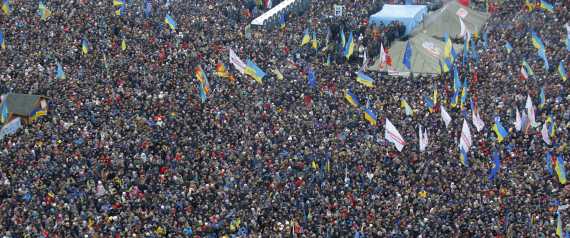
Evidence of a split within the Ukrainian populace has not felt so clear as it does during the current protests in quite a while. Even government officials are failing to keep a coherent front, with differing claims of a complete lean toward Russia and a continued lead toward Europe. Moreover, pro-government protesters are being bused in from the East and South, which may only lead to further societal divisions. No matter - the faux protests are no match for the 200,000 rallying of their own accord.


Meanwhile, under all the protests, what comes next is still a question. Foreign Policy points out the waning influence of Russia's geopolitical energy strategies. This has been a concern for several years now, as Russian oil production has begun to collapse and its natural gas strength challenged by the early development of an international market (led by new technological development out of the United States).

Russia has not really developed a mixed economy, so were its geopolitical arsenal to weaken, it could become increasingly unpredictable politically. Has Ukraine become a battleground? Well, there's little other reason for current United States Congressmen to be addressing Ukrainians in Kiev, is there?

Thursday, May 17, 2012

Europe's Greek Tragedy?

As Greece heads towards elections on June 17, the drama is unfolding not unlike one of its ancient tragedies. While Europe is enveloped in the melodrama of successively failing Greek governments and the potential for Greece's exit from the Eurozone (even becoming termed the "Grexit" as I've learned from The Economist), the rest of the world is watching cautiously.

The question on every European politican's mind is whether an exit by Greece, a seriously indebted outlier, could trigger the collapse of the Eurozone altogether and the death knell of an integrated Europe. Greece is followed, in no short order, by Portugal and Ireland, with Italy and Spain not lagging far behind. Further concern over France and the Netherlands continues to grow daily. It is perhaps Germany who seems the strongest, but 40% of its exports are to the Eurozone. If a domino effect were to occur, Europe would be shorn apart.

At least until mid-June, it seems that the threat is grave, but overstated. The "contagion" problem, and the ramifications of the collapse of the Euro are so great, that it is unlikely that Europe's stronger economies, namely Germany, would allow a weak economy to so significantly affect them. Protection against the sovereign risk of a Greek default or a Greek exit is minimal, with the default being more likely and easier to work through (though not easy in any means). In essence, Europe's strong would need to convince investors, the people, and other nations that a Greek exit would have little to no effect on the Euro. All in all, that is highly unlikely to occur, and even less so in the course of a single month.

Therefore, if Greece were to stay, it would need to be controlled. In order for it to be controlled, a more unified Eurozone fiscal and budgetary policy would need to be implemented. So although we see a Europe today in crisis, is it really in any more crisis than when Ireland rejected the Lisbon Treaty in 2008 or when the European Union enlarged in 2004 and 2007? Recall that the Lisbon Treaty was ratified in time and European expansion has slowed, but never fully stopped (Croatia looks to be next to join). This is the dichotomous story of Europe since World War II - always either about to collapse into itself or integrate further. The value of integration has been well illustrated over the decades, and the value of collapse well understood by two major wars and some smaller, but still noteworthy conflicts. The question really remains: do today's politicians, and today's citizens for that matter, remember what happened when Europe collapses? If they don't, or if they choose to ignore it, the tragedy they're watching may simply be a story within a story, with the themselves as the main characters failing to see the relationship to their own situation.